
Imagine a browser that doesn’t just surf the web, it unlocks the whole decentralized internet for you. That is the power of a DApp browser, a Web3-native gateway that connects users directly to blockchain-based applications such as DeFi platforms, NFT marketplaces, DAOs, and more. For Web3 users, these browsers are essential tools that combine wallet integration, smart contract interaction, and multi-chain compatibility, all within a secure and user-friendly interface.
Whether you are minting NFTs, staking tokens, or exploring decentralized social networks, DApp browsers make it seamless. As demand for privacy, transparency, and user control grows, choosing the right browser can significantly impact your DApp’s visibility and adoption.
Let’s explore the top DApp browsers that lead the pack in security, usability, and cross-chain support, and why they are shaping the future of decentralized access.
What Is a DApp Browser?
A DApp browser (short for Decentralized Application browser) is a web browser or browser extension designed specifically to connect users to blockchain-based applications. Unlike traditional browsers, DApp browsers are built to interact directly with smart contracts and decentralized protocols on networks such as Ethereum, Solana, and Binance Smart Chain.
DApp browsers serve as a gateway between users and blockchain ecosystems by:
- Integrating crypto wallets, such as MetaMask and Trust Wallet, to authenticate users and manage digital assets.
- Executing smart contracts directly from the browser interface.
- Facilitating secure transactions without relying on centralized intermediaries.
- Providing native support for blockchain protocols, allowing seamless access to dApps.
This setup enables users to interact with decentralized finance (DeFi) platforms, NFT marketplaces, DAOs, and blockchain games directly within the browser.
DApp browsers are essential for navigating the decentralized web (Web3) because they enable secure wallet connectivity, allowing users to sign transactions and manage tokens safely. They enable DeFi access, including lending, borrowing, staking, yield farming, and support NFT interactions, such as minting, trading, and viewing digital collectibles. DApp browsers also maintain user sovereignty, as data and assets remain under the user’s control rather than being stored by centralized entities.
DApp browsers are reshaping how users interact with the internet by empowering them to engage directly with decentralized ecosystems. Whether you are exploring DeFi protocols or collecting NFTs, they are your passport to the world of blockchain.
DApp Browser vs Traditional Browser
DApp browsers differ from traditional browsers in that they offer built-in crypto wallet integration, blockchain compatibility, and secure transaction signing, making them essential for interacting with decentralized applications (dApps) within the Web3 ecosystem.
| Feature | DApp Browser | Traditional Browser |
| Wallet Integration | Built-in or native support for crypto wallets | Requires extensions, such as MetaMask |
| Transaction Signing | Direct signing of blockchain transactions | Not supported natively |
| Blockchain Compatibility | Connects to Ethereum, Solana, BNB Chain, etc. | No native blockchain support |
| dApp Access | Seamless access to DeFi, NFTs, DAOs, and games | Limited or no access without plugins |
| Privacy & Security | Enhanced privacy with decentralized identity and data | Relies on centralized data tracking |
| Smart Contract Interaction | Direct execution and interaction with smart contracts | Not supported |
| Web3 Support | Full Web3 capabilities | Primarily Web2-oriented |
Some features where Web3 browsers outperform Web2 browsers are listed below.
- Built-in Crypto Wallet Access: DApp browsers include built-in wallets such as MetaMask, Trust Wallet, or Phantom, allowing users to store/manage cryptocurrencies, sign transactions securely, and authenticate with dApps using wallet addresses. This eliminates the need for third-party extensions, streamlining the user experience.
- Transaction Signing & Smart Contract Interaction: Unlike traditional browsers, dApp browsers allow users to sign blockchain transactions directly from the browser interface. This is crucial for executing trades on decentralized exchanges (DEXs), minting or transferring NFTs, and participating in governance via DAOs. Smart contract calls are handled natively in Web3 browsers, ensuring secure, transparent interactions.
- Blockchain Compatibility: DApp browsers are designed to connect to multiple blockchain networks, including Ethereum, Solana, Binance Smart Chain, and Polygon. This multi-chain support enables users to explore a wide range of decentralized services without needing to switch platforms.
- Enhanced Privacy Features: DApp browsers prioritize user sovereignty and privacy by avoiding centralized data collection, supporting decentralized identity protocols, and allowing users to control their own keys and data. This contrasts with traditional browsers, which often track user behavior for advertising and analytics purposes.
- Seamless Web3 Experience: In essence, DApp browsers are the native interface for Web3, enabling users to access decentralized finance (DeFi), trade/collect NFTs, engage with decentralized social platforms, explore blockchain-based games, and metaverses. They are not just browsers; they are portals to the decentralized internet.
Best DApp Browsers to Explore and Integrate Your Web3 App
Here are 12 of the best DApp browsers for Web3, each offering unique strengths in wallet integration, security, and multi-chain support to help users explore and developers integrate decentralized applications.
1. MetaMask
MetaMask is one of the most widely used DApp browsers and crypto wallets, known for its robust Web3 capabilities and developer-friendly ecosystem. Its key features include;
- Wallet Integration: Secure Ethereum-based wallet with support for ERC-20 and NFTs.
- Multi-Chain RPC Support: Easily connect to Ethereum, BNB Chain, Polygon, Avalanche, and custom EVM-compatible networks.
- Swaps: Built-in token swap feature with competitive rates across multiple DEXs.
- Snaps: Modular extensions that allow developers to add custom features like non-EVM chain support, enhanced security, and analytics.
Pros
- Trusted by millions with a strong developer community
- Extensive documentation and tooling for dApp integration
- Supports browser extension and mobile app
- Snaps enable customization and future-proofing
Cons
- Limited native support for non-EVM chains, such as Solana
- It can be overwhelming for beginners due to technical complexity
- Occasional phishing risks if users don’t verify the dApp’s authenticity
Metamask is best for developers, traders, and casual crypto users, and it remains a cornerstone of the Web3 experience, offering flexibility, security, and deep ecosystem integration.
2. Trust Wallet
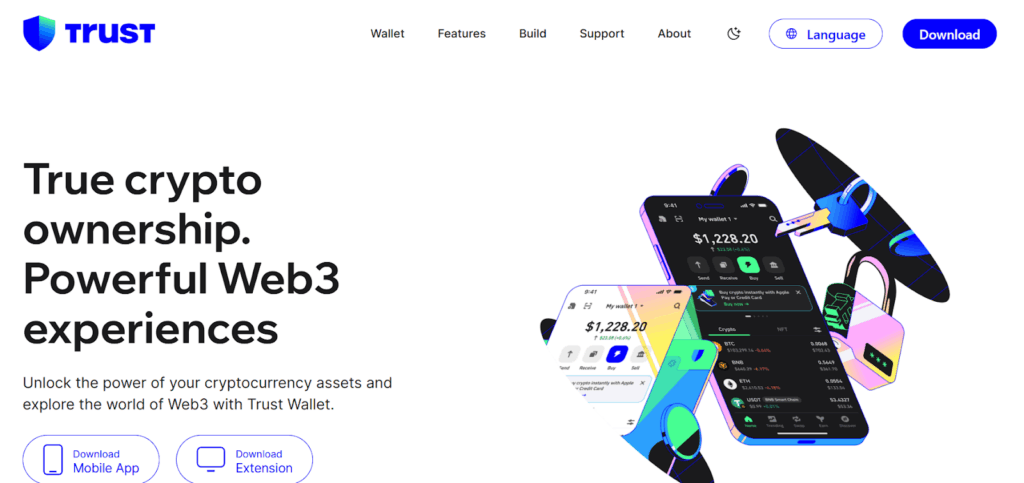
Trust Wallet is a mobile-first DApp browser and crypto wallet that offers seamless access to decentralized applications across multiple blockchains, all from your smartphone. Its key features include;
- Built-in Wallet: Supports thousands of tokens and NFTs across major blockchains.
- DApp Browser: Native browser for exploring DeFi, NFT marketplaces, and games.
- Multi-Chain Support: Ethereum, BNB Chain, Solana, Polygon, Avalanche, and more.
- Staking & Swaps: In-app staking and token swaps with competitive rates.
- Biometric Security: Optional fingerprint or Face ID protection for added safety.
Pros
- Intuitive mobile interface with fast onboarding
- Broad blockchain coverage and token support
- No need for browser extensions as everything is in-app
- Active developer community and frequent updates
Cons
- Limited desktop/browser extension support
- Advanced features, such as custom RPCs, may require manual setup
- DApp browser access may be restricted on iOS due to App Store policies
Trust Wallet is best for casual crypto users, NFT collectors, and DeFi enthusiasts.
3. Brave Browser
Brave Browser is a privacy-first web browser with native Web3 capabilities, making it a powerful tool for users seeking secure, seamless access to decentralized applications. Its key features include;
- Built-in Wallet: Supports Ethereum, Solana, and other EVM-compatible chains with no need for extensions.
- Web3 Compatibility: Native support for dApps, NFTs, and DeFi platforms.
- Privacy Tools: Ad blocker, tracker blocker, and optional VPN for enhanced online privacy and anonymity.
- BAT Rewards: Users earn Basic Attention Token (BAT) for viewing privacy-respecting ads.
- Multi-Chain Support: Connects to Ethereum, Solana, Filecoin, and custom RPCs.
Pros
- No need for third-party wallet extensions
- Strong privacy protections and ad-free browsing
- Fast performance and lightweight design
- Regular updates and a growing Web3 ecosystem
Cons
- Limited mobile dApp browser functionality compared to desktop
- Smaller user base than Chrome or Firefox
- Fewer advanced developer tools for dApp testing
Brave Browser is best for privacy advocates, casual Web3 explorers, and NFT/DeFi users.
4. DappRadar
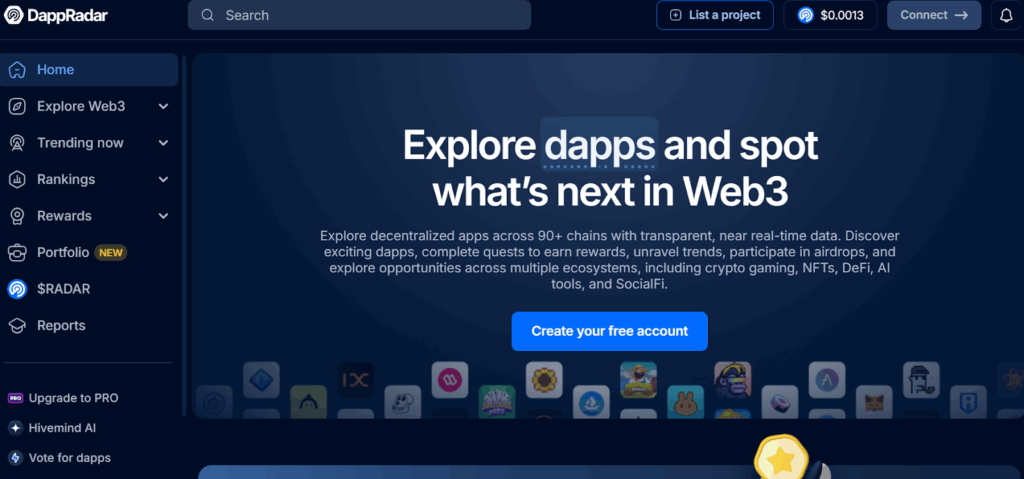
DappRadar is not a traditional DApp browser but a powerful Web3 discovery and analytics platform that helps users explore, track, and interact with decentralized applications across multiple blockchains. Its key features include;
- DApp Discovery: Browse rankings and categories for DeFi, NFTs, GameFi, and more across 50+ blockchains.
- Portfolio Tracker: Connect your wallet to monitor assets, NFTs, and DeFi positions in real time.
- Token Explorer: Analyze token performance, volume, and user activity.
- DApp Store: Curated listings with direct links to launch dApps via integrated wallets or external DApp browsers.
- Cross-Chain Insights: Compare dApp performance across Ethereum, BNB Chain, Polygon, Solana, and others.
Pros
- Comprehensive analytics and real-time data
- Easy wallet connection for personalized tracking
- Supports a wide range of blockchains and dApp categories
- Ideal for discovering trending or high-performing dApps
Cons
- Not a standalone browser, as it requires an external wallet/browser to interact with dApps
- Limited direct transaction functionality compared to native DApp browsers
Dappradar is best for developers, investors, traders, and Web3 explorers.
5. Opera Crypto Browser
Opera Crypto Browser is a Web3-enhanced version of the popular Opera browser, designed to offer a seamless and secure experience for interacting with decentralized applications and managing crypto assets. Its key features include;
- Built-in Crypto Wallet: Supports Ethereum, BNB Chain, Polygon, and other EVM-compatible networks.
- Native DApp Browser: Explore DeFi platforms, NFT marketplaces, and blockchain games directly from the browser.
- Privacy Tools: Includes free VPN, ad blocker, and tracker protection.
- Multi-Chain Support: Connects to multiple blockchains via WalletConnect and custom RPCs.
- Crypto Corner: Aggregates Web3 news, token prices, and educational content in one dashboard.
Pros
- Full-featured desktop browser with Web3 integration
- No need for third-party wallet extensions
- Strong privacy and security features
- User-friendly interface for both crypto and non-crypto users
Cons
- Mobile version may lack some advanced Web3 features
- Smaller ecosystem compared to MetaMask or Trust Wallet
- Limited developer tooling for dApp testing
Opera Crypto Browser is best for privacy-conscious users, multi-chain explorers, and newcomers to Web3.
6. OKX Wallet
OKX Wallet is a multi-platform Web3 wallet and DApp browser developed by the global crypto exchange OKX. It offers robust multi-chain support and deep integration with DeFi, NFTs, and GameFi ecosystems. Its key features include;
- Multi-Chain Wallet: Supports 80+ blockchains, including Ethereum, BNB Chain, Polygon, Solana, and Aptos.
- DApp Discovery Portal: Built-in browser for exploring trending dApps across DeFi, NFTs, and gaming.
- One-Click Wallet Creation: Easy onboarding with seedless wallet options and social login.
- NFT Hub: Aggregates NFT collections and marketplaces for seamless browsing and trading.
- DeFi Dashboard: Track staking, lending, and yield farming positions across chains.
Pros
- Extensive blockchain support and cross-chain asset management
- Intuitive UI for both mobile and desktop users
- Integrated with OKX exchange for easy asset transfers
- Offers seedless wallet creation for simplified onboarding
Cons
- Some features are tied to the OKX ecosystem
- It may be overwhelming for beginners due to its broad functionality
- Less open-source transparency compared to wallets like MetaMask or Taho
OKX Wallet is best for multi-chain traders, NFT collectors, Web3 gamers, and DeFi users.
7. Phantom
Phantom is a sleek, user-friendly DApp browser and wallet originally built for the Solana ecosystem and now expanded to support Ethereum and Polygon. It is known for its fast performance, intuitive design, and strong NFT support. Its key features include;
- Multi-Chain Wallet: Supports Solana, Ethereum, and Polygon with seamless switching.
- DApp Browser: Mobile and browser extension access to DeFi, NFTs, and games.
- NFT Gallery: Built-in viewer for managing and showcasing NFT collections.
- Staking & Swaps: In-app staking for Solana and token swaps across supported chains.
- Security Tools: Includes phishing protection, transaction previews, and biometric login.
Pros
- Clean, beginner-friendly interface
- Fast transaction signing and wallet performance
- Strong NFT and Solana ecosystem integration
- Available on mobile and desktop (Chrome, Firefox, Brave)
Cons
- Limited support for non-EVM chains beyond Solana, Ethereum, and Polygon
- Fewer advanced developer tools compared to MetaMask
- No built-in analytics or portfolio tracking
Phantom wallet is best suited for Solana users, NFT collectors, and casual Web3 users.
8. MyEtherWallet
MyEtherWallet (MEW) is one of the earliest Ethereum wallets, offering a secure and flexible interface for interacting with the Ethereum blockchain and its decentralized applications. Its key features include;
- Ethereum-Focused Wallet: Non-custodial wallet for ETH and ERC-20 tokens.
- DApp Integration: Access to Ethereum-based dApps via MEW’s mobile app and browser interface.
- Hardware Wallet Support: Compatible with Ledger and Trezor for enhanced security.
- Swap & Buy Crypto: In-app token swaps and fiat-to-crypto purchase options.
- Custom RPCs: Connect to testnets and custom Ethereum-compatible networks.
Pros
- Long-standing reputation and open-source foundation
- Strong security features with hardware wallet integration
- Clean interface for managing Ethereum assets
- No third-party custody, as users control their private keys
Cons
- Limited support for non-Ethereum blockchains
- Less intuitive for beginners compared to mobile-first wallets
- DApp browser access is more limited than competitors like MetaMask or Trust Wallet
MyEtherWallet is best for Ethereum purists, security-conscious users, advanced users, and developers.
9. TokenPocket
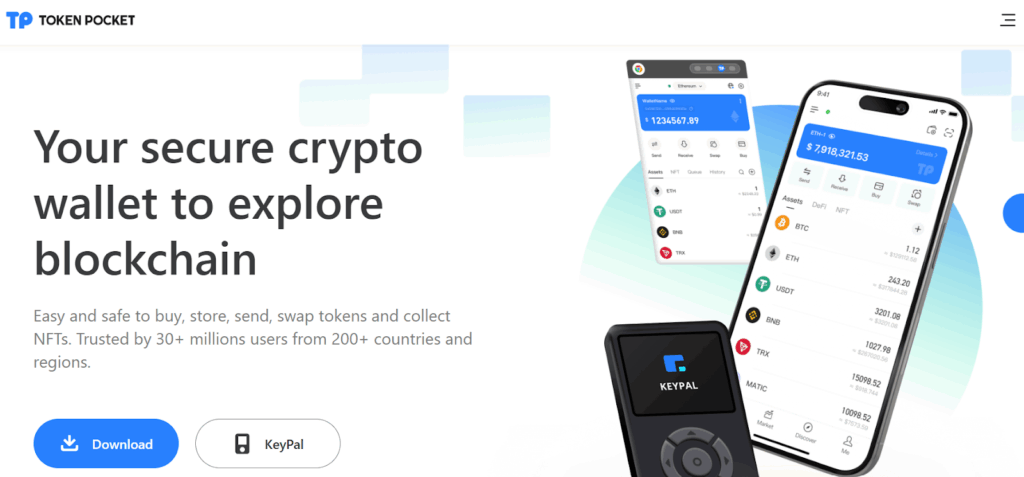
TokenPocket is a versatile multi-chain wallet and DApp browser designed for global Web3 users, especially popular in Asia. It supports a wide range of blockchains and offers both mobile and desktop access to decentralized applications. Its key features include;
- Multi-Chain Wallet: Supports Ethereum, BNB Chain, TRON, EOS, Polkadot, and more.
- Built-in DApp Browser: Explore DeFi, NFTs, and blockchain games directly within the app.
- Cross-Platform Access: Available on iOS, Android, Windows, and macOS.
- Token & NFT Management: View, send, and receive tokens and NFTs across supported chains.
- Staking & Swaps: In-app staking and token exchange features for supported networks.
Pros
- Broad blockchain support, including non-EVM chains like EOS and TRON
- Available in multiple languages for global accessibility
- Active developer ecosystem and SDKs for dApp integration
- Strong presence in Asian markets with localized support
Cons
- The interface may feel cluttered for new users
- Less known in Western markets compared to MetaMask or Trust Wallet
- Some advanced features require manual configuration
TokenPocket is best for multi-chain users, developers, and global crypto users.
10. 1inch Wallet
1inch Wallet is a mobile-first DApp browser and crypto wallet developed by the 1inch Network, known for its powerful aggregation of decentralized exchanges (DEXs) and seamless DeFi access. Its key features include;
- DEX Aggregation: Access the best token swap rates across multiple DEXs using 1inch’s routing algorithm.
- Multi-Chain Support: Ethereum, BNB Chain, Polygon, Avalanche, Arbitrum, Optimism, and more.
- Built-in DApp Browser: Explore DeFi protocols, NFT platforms, and Web3 games directly from the app.
- Secure Wallet: Non-custodial wallet with private key control and biometric authentication.
- Gas Optimization: Features like “Chi Gas Token” and optimized routing reduce transaction costs.
Pros
- Best-in-class swap rates via DEX aggregation
- Intuitive mobile interface with fast performance
- Strong DeFi integration and multi-chain access
- Secure and privacy-focused wallet experience
Cons
- Limited desktop/browser extension support
- Primarily focused on DeFi with less emphasis on NFTs or gaming
- It may be complex for beginners unfamiliar with DEXs
1inch wallet is best for DeFi traders, multi-chain users, and mobile-first web3 users.
11. AlphaWallet
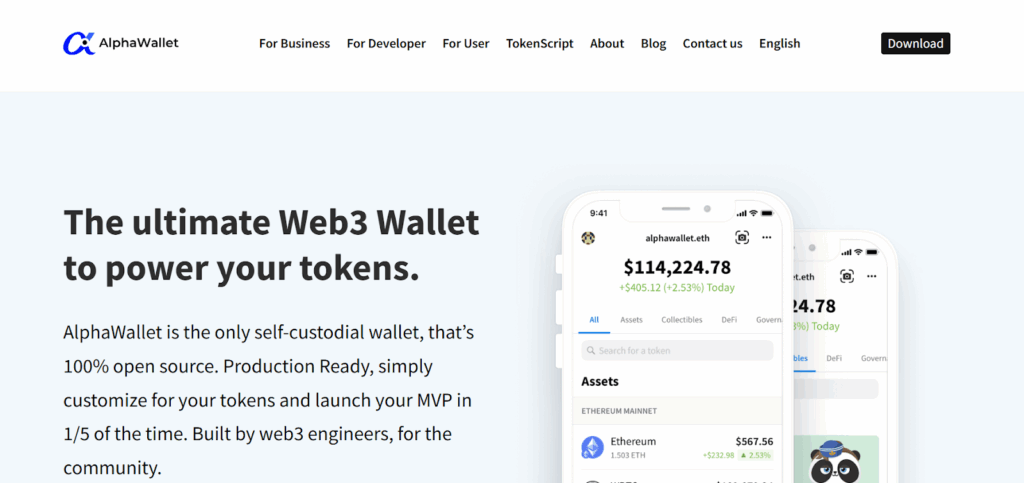
AlphaWallet is a mobile-first, open-source Ethereum wallet designed for seamless interaction with decentralized applications, especially in the NFT and tokenized asset space. Its key features include;
- Native Token Scripts: Customizable smart contract templates for NFTs, DAOs, and tokenized assets.
- Built-in DApp Browser: Mobile access to Ethereum-based dApps, including DeFi, games, and marketplaces.
- Open Source: Fully transparent codebase, ideal for developers and enterprise integration.
- NFT Support: Deep integration with NFT standards and marketplaces.
- Secure Wallet: Non-custodial with private key control and biometric authentication.
Pros
- Strong focus on tokenization and NFT use cases
- Open-source and developer-friendly
- Clean mobile interface with fast performance
- Supports custom smart contract interactions
Cons
- Limited to Ethereum and EVM-compatible chains
- No desktop or browser extension version
- Smaller user base compared to MetaMask or Trust Wallet
AlphaWallet is best for NFT collectors/creators, developers, and enterprise projects.
12. Base App
Base App is the native wallet and DApp browser for the Base blockchain, a Layer 2 network built by Coinbase on the Ethereum stack. It’s designed to offer fast, low-cost access to decentralized applications while integrating tightly with the Coinbase ecosystem. Its key features include;
- Native to Base Chain: Optimized for speed and low gas fees on the Base Layer 2 network.
- DApp Browser: Explore and interact with Base-native dApps, including DeFi, NFTs, and on-chain games.
- Coinbase Integration: Seamless bridging and asset transfers between Coinbase and Base.
- Secure Wallet: Non-custodial wallet with private key control and biometric security.
- Developer-Friendly: Built on the OP Stack, making it easy for Ethereum dApps to deploy on Base.
Pros
- Fast and low-cost transactions via Layer 2 scaling
- Easy onboarding for Coinbase users
- Growing ecosystem of Base-native dApps
- Strong developer support and documentation
Cons
- Limited to the Base and Ethereum ecosystems
- Smaller dApp directory compared to more mature platforms
- Still early in adoption compared to other L2s like Arbitrum or Optimism
The Base App is ideal for Coinbase users, developers, and newcomers to Web3.
Want to Market Your DApp? Let’s Talk
Techtonic Marketing (TMCO) is your go-to growth partner for scaling decentralized applications. With deep roots in the Web3 space since 2017, we help DApp projects boost discoverability, drive user adoption, and build lasting communities through tailored crypto-native marketing strategies. Our services include;
- Fractional CMO Services: Get CMO-level strategy without the full-time cost. TMCO embeds seasoned growth architects into your team to lead your marketing roadmap.
- Web3-Specific Campaigns: From DeFi to NFTs, TMCO understands the nuances of blockchain audiences and crafts campaigns that resonate with crypto users.
- Community Building: We turn your social channels into community magnets, fostering engagement and loyalty across Discord, X (formerly Twitter), Telegram, and more.
- Performance Marketing: Leverage paid ads, influencer outreach, and conversion rate optimization (CRO) to scale user acquisition efficiently.
Ready to take your DApp to the next level? Book your free strategy call with TMCO right now and unlock the full potential of your decentralized project.
Frequently Asked Questions
Are DApp browsers safe to use?
Yes, DApp browsers are generally safe to use, especially when sourced from reputable providers like MetaMask, Trust Wallet, or Brave. They use secure wallet integrations and encrypted transaction signing to protect user assets and data. However, you should still exercise caution by verifying the authenticity of the dApp, avoiding suspicious links, and keeping your private keys secure.
Do I need to submit my DApp to a DApp browser to get listed?
Not necessarily. Many DApp browsers automatically index popular or trending dApps from public blockchain networks. However, if you want your DApp to appear in curated lists or featured sections, submitting it directly to the browser or its associated directory can help. Platforms like Trust Wallet or MetaMask offer submission forms or developer portals for listing.
Which DApp browser has the best security features?
MetaMask, Trust Wallet, and Brave Browser are widely recognized for offering strong security features among DApp browsers. MetaMask provides encrypted key storage and secure transaction signing. Trust Wallet features biometric authentication and supports multiple blockchain networks. Brave Browser enhances privacy with built-in ad blocking and native wallet integration.
How can I make my DApp compatible with major browsers?
To make your DApp compatible with major browsers, build it using standard web technologies like HTML, CSS, and JavaScript. Integrate Web3 libraries such as ethers.js or web3.js to enable blockchain interactions. Ensure your DApp connects to wallet extensions like MetaMask, which bridge traditional browsers to blockchain networks. Use responsive design for cross-device compatibility and test across Chrome, Firefox, Brave, and Safari. Hosting your DApp on HTTPS also improves security and trust.
How can I promote my DApp inside these browsers?
To promote your DApp inside DApp browsers, submit it to their official directories or featured listings. Platforms like Trust Wallet, MetaMask, and Coinbase Wallet often have developer portals that provide this functionality. You can also integrate deep linking and QR codes to drive traffic from social media or websites directly into the browser. Collaborating with Web3 influencers and running token-based incentives or airdrops can boost visibility.