
Imagine a world where your followers are yours forever, your content earns you crypto, and your brand isn’t at the mercy of algorithms or ad policies. This is no longer a dream; it is Web3 social media, which is already happening right now. Built on blockchain technology, Web3 social platforms are decentralized networks that give users and brands ownership over their data, content, and relationships.
As users grow weary of data exploitation, censorship, and algorithmic manipulation in Web 2.0, Web 3.0 social media has emerged as a powerful alternative. Platforms like Lens Protocol, Farcaster, and CyberConnect are redefining how creators and brands interact.
Finding reliable, trustworthy Web3 social platforms is challenging. For this reason, we have curated a list of the 11 best Web3 social media platforms that you can use now to build tokenized communities, run decentralized campaigns, monetize engagement, and tap into crypto-native audiences.
Web2 vs. Web3 Social Media Platforms: The Difference
Web3 social media refers to platforms built on decentralized technologies, such as blockchain, where users own their data, identities, and even parts of the platform itself. These platforms aim to be more transparent and resistant to censorship.
The key components of Web3 social media include;
- Decentralization: Instead of being controlled by a single company, such as Meta, Web3 platforms run on distributed networks. This means no central authority decides what content stays or goes, and users have more control over how the platform evolves.
- Token Incentives: Users and creators can earn cryptocurrency or platform-specific tokens for their contributions, such as posting or developing features. These tokens often give voting rights or can be traded, creating a more participatory and rewarding ecosystem.
- User Data Ownership: In Web3, your data belongs to you. You can choose to keep it private, share it selectively, or even monetize it. Unlike Web2, where platforms harvest and sell user data, Web3 gives you full control.
- Interoperability: Web3 platforms are designed to work together. Your identity and assets can be seamlessly transferred across different apps and services, thanks to shared standards and blockchain infrastructure.
Here is a quick comparison between Web2 and Web3 social media and how they operate.
| Feature | Web2 Social Media | Web3 Social Media |
| Control | Centralized | Decentralized |
| Monetization | Ads and platform-driven | Token rewards for contributions |
| Data Ownership | The platform owns your data | You own and control your data |
| Censorship | Platform decides | Community-driven or censorship-resistant |
| Interoperability | Walled gardens | Cross-platform compatibility |
11 Best Web3 Social Media Platforms for Online Engagement and Marketing
Unlike traditional Web2 platforms that monetize user data and content through ads, Web3 platforms empower users to own their digital identities, earn rewards for participation, and interact across interoperable networks. For marketers and creators, this presents new opportunities for authentic engagement and monetization, eliminating the need for centralized gatekeepers.
Here are 11 standout Web3 social media platforms that are driving online engagement and marketing in 2026.
| Platform | Number of Users | Core Focus | Best For |
| Lens Protocol | 107,000 | Decentralized social graph infrastructure | Web3 creators, developers, DAOs, and crypto-native communities |
| Farcaster | 546,000 | Decentralized and composable social protocol | Crypto-native users, developers, and communities |
| Minds | NA (Hundreds of thousands estimated) | Privacy-first and decentralized social networking | Activists and independent creators |
| Audius | 7.5 million monthly | Decentralized music streaming with artist ownership | Independent musicians, DJs, and music superfans |
| Odysee | 5.3 million monthly | Decentralized video sharing | Independent video creators and free speech advocates |
| DSCVR | 400,000 monthly | Tokenized community building with NFT engagement | Crypto communities, NFT collectors, and Web3 creators |
| CyberConnect | 1.2 million | Decentralized social graph infrastructure for identity and content ownership | Web3 developers, DAOs, and crypto-native creators |
| Mastodon | 10 million registered accounts | Federated and open-source social networking | Journalists, academics, and technologists |
| Showtime | 250,000 | Social discovery and sharing of NFTs with creator ownership | Digital artists, NFT collectors, and visual creators |
| Chingari | 5 million daily | Short-form video entertainment with tokenized creator monetization | Content creators, influencers, and fans in emerging markets |
| Soclly | NA (thousands estimated) | Decentralized peer-to-peer knowledge exchange | Educators, mentors, consultants, and professionals |
1. Lens Protocol

Lens Protocol has over 107,000 registered users, with approximately 22,000 daily active users, making it one of the leading decentralized social platforms. It is a decentralized social graph built on the Polygon blockchain, developed by the team behind Aave.
It allows users to own their profiles, content, and connections through NFTs and smart contracts. Unlike traditional platforms, Lens enables developers to build social apps without requiring permission, giving creators full control over their data and monetization.
Pros
- Users own their profiles and content via NFTs.
- Permissionless development encourages innovation.
- Strong community of Web3-native creators and developers.
- An interoperable ecosystem with multiple client apps.
- Token-based incentives and monetization options.
Cons
- Still relatively small compared to mainstream platforms.
- Early-stage UX may be confusing for non-Web3 users.
- Limited discoverability and network effects outside crypto circles.
- Requires setting up a crypto wallet, which can be a barrier to entry.
2. Farcaster
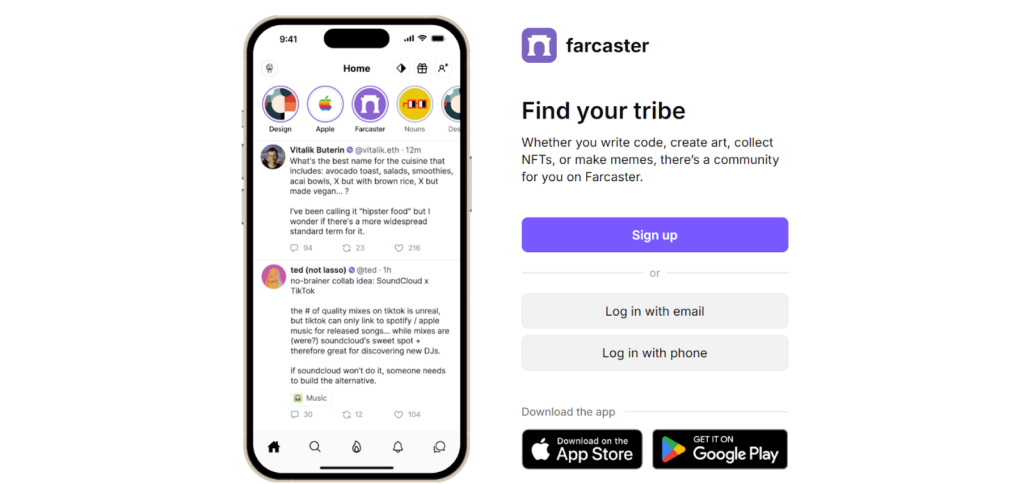
Farcaster has over 546,000 registered users and approximately 24,700 daily active users, with a major growth spike following the launch of its Frames feature in early 2024. It is a decentralized social media protocol built on Ethereum’s Optimism Layer 2 network. Founded by Dan Romero and Varun Srinivasan, it emphasizes user sovereignty, open development, and resistance to censorship.
Unlike traditional platforms, Farcaster enables multiple client apps to interact with its protocol, providing users with flexibility and developers with creative freedom. Its most popular client, Warpcast, introduced “Frames”, interactive posts that dramatically boosted engagement and user growth.
Pros
- Open protocol supports multiple client apps.
- Users own their data and identity.
- The frames feature enables interactive, engaging content.
- Strong developer community and rapid innovation.
- Censorship-resistant and privacy-focused.
Cons
- Requires crypto wallet setup, which may deter casual users.
- Still niche compared to mainstream platforms.
- Limited content moderation tools.
- Some clients have steep learning curves for newcomers.
3. Minds
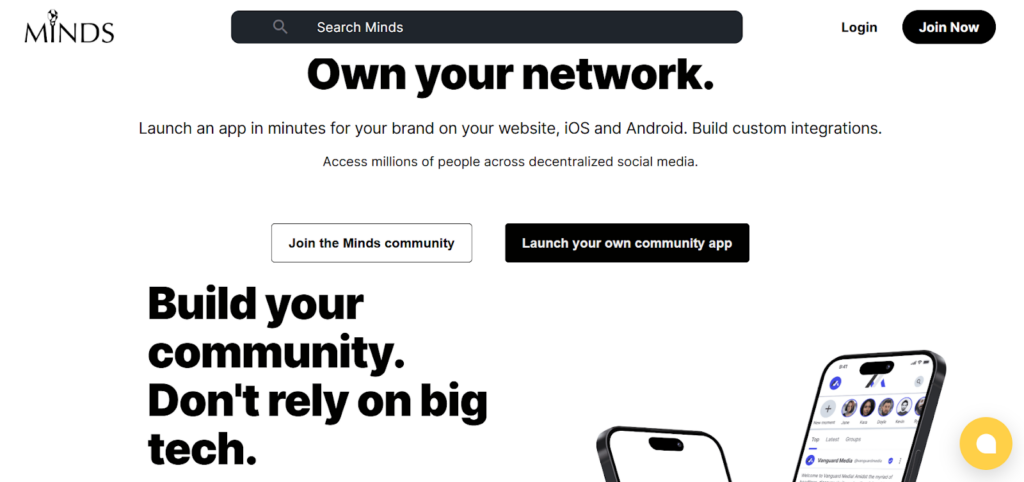
While exact user numbers aren’t publicly confirmed, Minds hosts hundreds of thousands of active users globally. It is an open-source, Ethereum-based social media platform that champions free expression, privacy, and user autonomy.
It blends familiar Web2-style features, such as newsfeeds, blogs, and video sharing, with Web3 principles, including tokenized engagement and decentralized governance. Users earn Minds tokens for their activity, which can be used to boost content or support creators.
Pros
- Users earn tokens for posting, sharing, and participating in engagement.
- Open-source architecture promotes transparency and trust.
- Strong commitment to privacy and free speech.
- Familiar interface eases transition from Web2.
- Token boosts help amplify content visibility.
Cons
- Minimal moderation can lead to the publication of content that is both controversial and polarizing.
- Smaller user base compared to mainstream platforms.
- Limited interoperability with other Web3 ecosystems.
- Token utility is mostly confined to the Minds platform.
4. Audius
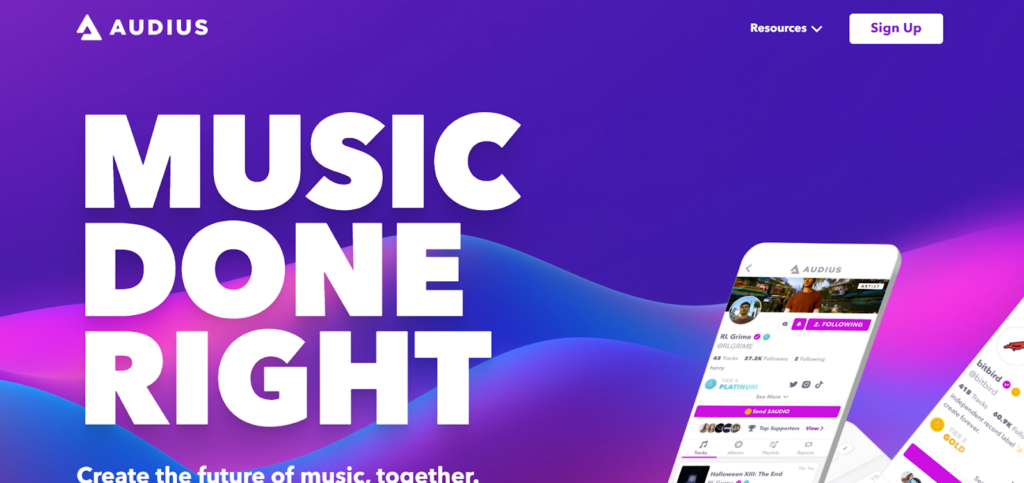
Audius boasts over 7.5 million monthly active users and hosts more than 250,000 artists with over 1 million tracks available for streaming. It is a decentralized music streaming platform built on blockchain technology, originally launched on POA Network and later migrated to Solana for scalability.
It empowers artists by removing intermediaries, allowing them to publish music directly to fans while retaining full ownership and control. The platform uses the AUDIO token for governance, staking, and rewards, enabling community-driven development and monetization.
Pros
- Artists retain full ownership of their music and royalties.
- No intermediaries allow direct artist-to-fan engagement.
- AUDIO token enables governance and staking rewards.
- Decentralized infrastructure ensures censorship resistance.
- Easy onboarding for non-crypto users.
Cons
- Limited monetization options compared to mainstream platforms.
- Discovery tools and playlist curation are still evolving.
- Not all features are fully decentralized yet.
- AUDIO token volatility may affect creator earnings.
5. Odysee
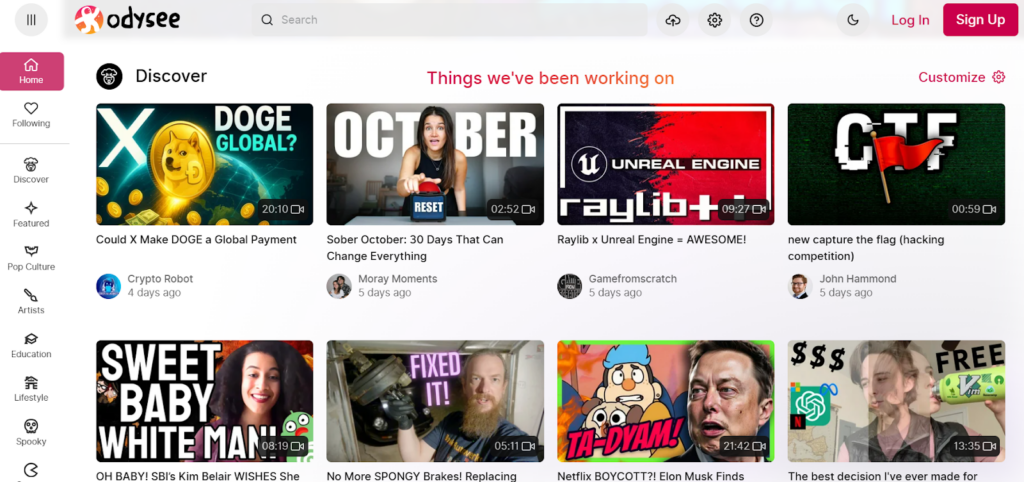
Odysee has over 5.3 million monthly active users, making it one of the most widely adopted decentralized video platforms in the Web3 space. It is a decentralized video-sharing platform built on the LBRY blockchain protocol. It offers a censorship-resistant alternative to YouTube, allowing creators to publish and monetize content without relying on centralized intermediaries.
Users earn LBC (LBRY Credits) for watching, sharing, and uploading videos. Odysee emphasizes free speech and content ownership, making it popular among creators who have faced demonetization or restrictions on mainstream platforms.
Pros
- Creators retain full ownership and control of their content.
- Monetization through LBC tokens for both creators and viewers.
- Censorship-resistant publishing via blockchain.
- Familiar interface similar to YouTube.
- Strong support for independent and alternative voices.
Cons
- Content moderation is minimal, which can lead to the attraction of controversial material.
- Smaller audience compared to YouTube or TikTok.
- LBC token volatility may affect earnings.
- Limited live streaming and advanced analytics features.
6. DSCVR

DSCVR has over 400,000 monthly unique users and more than 450,000 connected wallets, making it the largest Web3 social platform on the Solana blockchain. It is a fast-growing Web3 social media platform designed to blend community building with crypto-native functionality.
Originally launched on the Internet Computer and later integrated with Solana, DSCVR allows users to create tokenized communities, engage in peer-to-peer NFT transactions, and monetize content through airdrops and gated access. Its open API and wallet-native design make it easy for users to interact with digital assets directly within the platform, without needing external wallets or exchanges.
Pros
- Seamless integration with Solana and other Web3 ecosystems.
- Users can transact NFTs and receive airdrops directly on the platform.
- Token-gated communities and customizable governance tools.
- No need for external wallets as it provides a wallet-native experience.
- Rapid user growth and strong developer momentum.
Cons
- Still evolving moderation and content discovery tools.
- Requires a basic understanding of crypto to unlock full functionality.
- Limited visibility outside Web3-native circles.
- Monetization features may be complex for newcomers.
7. CyberConnect
CyberConnect has over 1.2 million users and creators across its ecosystem, with more than 300,000 monthly active users and 2.8 million on-chain interactions. It is a multi-chain decentralized social graph protocol designed to empower users with ownership over their digital identity, content, and connections.
Built on Ethereum, Polygon, Solana, and BNB Chain, it enables developers to build interoperable, censorship-resistant social applications. Its core components, including CyberID, CyberGraph, and CyberNetwork, allow users to manage their social presence across platforms using a single identity.
CyberConnect’s flagship app, Link3, supports token-gated communities, airdrops, and Web3-native engagement tools, making it a hub for creators and crypto projects.
Pros
- Users own their identity and social data via CyberID NFTs.
- Multi-chain support enhances scalability and interoperability.
- Link3 app offers token-gated access, airdrops, and job discovery.
- Strong developer ecosystem with over 2,900 integrated projects.
- Enables seamless migration of social identity across platforms.
Cons
- Requires basic crypto knowledge to navigate effectively.
- Still building mainstream awareness outside Web3 circles.
- Monetization tools are evolving and may be complex for newcomers.
- Fragmented user experience across different apps and chains.
8. Mastodon
Mastodon has over 1.7 million monthly active users and more than 10 million registered accounts across thousands of independently operated servers, known as instances. It is a decentralized, open-source social networking platform built on the ActivityPub protocol. Unlike centralized platforms, Mastodon operates as a federation of servers, each with its own rules, moderation policies, and communities.
Users can join any instance or even host their own, while still interacting with users across the network. Mastodon emphasizes privacy, community autonomy, and chronological feeds, making it a popular alternative to X (formerly Twitter), especially among journalists, academics, and open web advocates.
Pros
- Fully decentralized and federated with no central authority.
- Users can choose or create instances that match their values.
- No ads or algorithmic manipulation of feeds.
- Strong privacy controls and content warnings.
- Vibrant communities around niche interests.
Cons
- Fragmented user experience across different instances.
- Onboarding can be confusing for newcomers.
- Limited discoverability and trending content visibility.
- No native monetization or token incentives.
9. Showtime
Showtime has attracted over 250,000 registered users and continues to grow steadily, especially among NFT creators and collectors. It is a Web3 social media platform focused on showcasing and discovering NFTs. It combines the visual appeal of Instagram with blockchain-backed ownership, allowing users to display, share, and engage with digital art and collectibles.
Built on Ethereum and Polygon, Showtime enables creators to mint NFTs directly on the platform and build communities around their collections. It emphasizes creator ownership and tokenized engagement, making it a hub for artists and collectors in the decentralized space.
Pros
- Seamless NFT minting and sharing for creators.
- Instagram-style interface for easy visual discovery.
- Built-in wallet support for Ethereum and Polygon.
- Encourages community engagement around digital art.
- Creator-first platform with ownership and monetization tools.
Cons
- A niche focus may limit its appeal beyond NFT enthusiasts.
- Limited support for non-visual content types.
- Smaller user base compared to mainstream platforms.
- Monetization depends heavily on NFT market trends.
10. Chingari
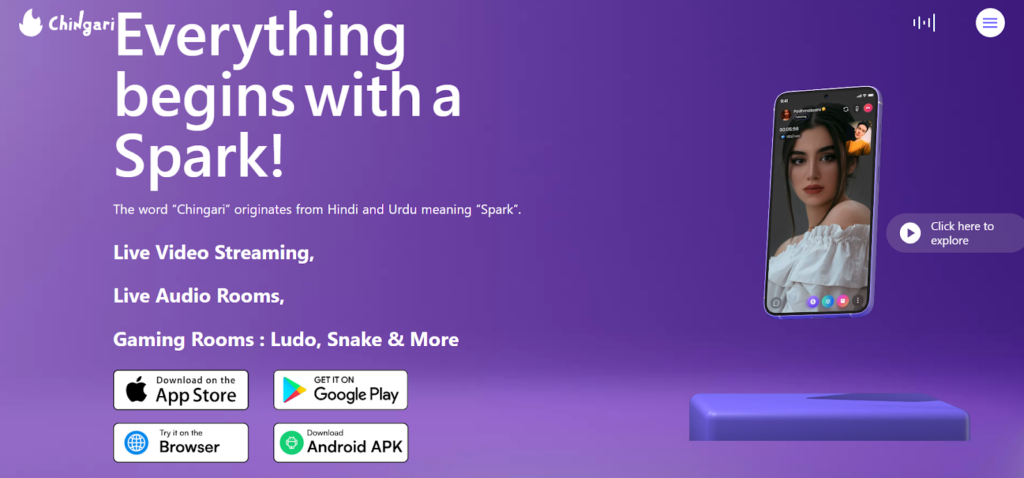
Chingari has over 200 million downloads and more than 5 million daily active users, making it one of the most popular short-video platforms emerging from India with Web3 integration. It started as a Web2 short-video app similar to TikTok but has evolved into a Web3-powered creator economy.
Built on the Aptos blockchain, it integrates the $GARI token to reward users and creators for engagement, content creation, and community participation. Chingari allows creators to monetize their content directly, while fans can support creators using tokens.
Pros
- A massive user base and a strong presence in South Asia.
- $GARI token enables direct monetization and fan engagement.
- Creator tokens and NFTs offer new revenue streams.
- Familiar short-video format with Web3 enhancements.
- Active development and partnerships in the Web3 space.
Cons
- Mainstream users may underutilize Web3 features.
- Token volatility can affect earnings and engagement.
- Limited global reach compared to TikTok or Instagram.
- Regulatory uncertainty around crypto in key markets.
11. Soclly
Soclly is still in its early growth phase, with a community of thousands of users and creators actively participating in its decentralized knowledge-sharing ecosystem. It is a Web3 social platform focused on peer-to-peer knowledge exchange.
Built on the Polygon blockchain, it enables users to monetize their time and expertise through paid one-on-one sessions, mentorship, and consultations. Soclly uses NFTs to tokenize time slots and credentials, ensuring transparency and ownership.
Pros
- Enables direct monetization of time and expertise.
- NFT-based booking system ensures transparency and ownership.
- Built on Polygon for low fees and scalability.
- Ideal for educators, mentors, and consultants.
- Promotes meaningful and value-driven interactions.
Cons
- A niche use case may limit mainstream appeal.
- Requires basic crypto knowledge to navigate bookings.
- Smaller user base compared to general-purpose platforms.
- Limited content-sharing features beyond consultations.
What are the Benefits of Web3 Social Media Platforms?
Web3 social media platforms offer a transformative shift from centralized control to user empowerment and transparent ecosystems. By leveraging blockchain technology, these platforms redefine how content is created, shared, monetized, and governed, benefiting both individual users and businesses in unique ways.
Benefits for Users
Web3 social media platforms are especially beneficial to users by offering them the freedom not found in Web2 social media platforms.
- Data Ownership: Users control their personal data and digital identity on Web3 social media platforms, reducing exploitation by third parties.
- Monetization Opportunities: Web3 social media platforms allow you to earn tokens or crypto rewards for engagement, content creation, and community participation.
- Censorship Resistance: Content is less likely to be removed arbitrarily, promoting freedom of expression.
- Interoperability: Web3 social media enables the seamless transfer of identity and assets across multiple platforms and apps.
- Privacy Protection: Enhanced privacy through decentralized authentication and reduced data tracking.
- Community Governance: In Web3 social media, users can vote on platform changes and policies using governance tokens.
- Direct Creator-Fan Relationships: The absence of intermediaries allows fans to support creators directly through tokens or NFTs.
Benefits for Businesses
Businesses can also benefit from Web3 social media through;
- New Revenue Models: Token-based economies enable businesses to monetize beyond ads.
- Audience Loyalty: Community-driven platforms foster deeper engagement and brand loyalty.
- Transparent Analytics: Blockchain-based metrics offer verifiable insights into user behavior and campaign performance.
- Decentralized Marketing Channels: Web3 social media allows businesses to reach niche audiences through token-gated communities and DAOs.
- Reduced Platform Dependence: Businesses aren’t locked into one platform’s rules or algorithms.
- NFT Integration: Brands can launch digital collectibles, loyalty programs, or exclusive content via NFTs.
- Global Reach: Web3 platforms often attract international and tech-savvy audiences open to new experiences.
How Crypto & Web3 Businesses Can Leverage These Social Media Platforms
Crypto and Web3 businesses can unlock powerful growth opportunities by strategically using decentralized social media platforms. These platforms offer direct access to engaged, crypto-native audiences, token-based incentives, and community-driven tools that traditional platforms lack.
- DAOs (Decentralized Autonomous Organizations): As a DAO, you can use the Web3 social media for community voting and governance. You can create token-gated spaces for token holders to access updates, perks, or early decisions. You can also utilize Web3 social media platforms to discover and onboard talent with verified Web3 credentials.
- DeFi Protocols: DeFi protocols can utilize Web3 social media to run educational campaigns and build trust. You can also use it for airdrop announcements, with wallet-native engagement, and to provide real-time updates.
- NFT Brands: NFT brands and projects can leverage Web3 social media platforms to showcase their collections and foster creator-fan engagement through AMAs or live chat. They can also launch exclusive content or early-access drops for users.
You can employ the following actionable growth strategies to benefit from Web3 social platforms as a business.
- Run Token-Based Campaigns: Offer rewards for sharing, commenting, or creating content. Use native tokens or NFTs as rewards to incentivize user referrals and engagement.
- Build Community Hubs: Create branded spaces on DSCVR or Farcaster. Use token gating to reward loyal users with perks, early access, or governance rights.
- Leverage Web3 Identity: Encourage users to connect wallets and use decentralized IDs. Use these identities for personalized experiences and loyalty tracking.
- Integrate NFTs into Content: Utilize NFTs for access passes, badges, or proof of participation. Showcase them on platforms like Showtime or Odysee to build brand culture.
- Cross Promote: Share content across Lens, Farcaster, and CyberConnect to maximize reach. Use interoperable tools to maintain a consistent identity and messaging.
- Track On-Chain Engagement: Monitor wallet interactions, token claims, and NFT usage to measure campaign impact. Use analytics from platforms like Link3 or DSCVR to refine strategy.
Frequently Asked Questions
Why don’t more people use Web3 social media platforms yet?
A lot of people still don’t use Web3 social media platforms because of the complex onboarding mechanism, smaller network effects, underdeveloped UX, token volatility, and lack of awareness.
Do I need a crypto wallet to use Web3 social media?
Not always, but having one unlocks the full experience. Most Web3 social media platforms are designed around blockchain interactions, so a crypto wallet is often required to create a profileown your content, and participate in governance.
Are Web3 social media platforms free to use?
Yes, most Web3 social media platforms are free to use at the basic level. You can browse content, follow users, and engage with communities without incurring any costs. However, some features may require blockchain interaction, which can involve small fees or the use of tokens.
Can I transfer my followers across Web3 platforms?
Not directly, but Web3 makes it possible in ways that Web2 never could. In traditional social media, your followers are locked into each platform. However, in Web3, your social graph, including followers, connections, and identity, can be stored on-chain or tied to your wallet, which opens up new possibilities.
How do creators actually earn money on Web3 social networks?
Creators earn money on Web3 social networks through token rewards for engagement, NFT sales, royalties, content boosting, tipping, token-gated access, airdrop campaigns, and consultations.