
Scaling campaigns across today’s fragmented digital landscape is harder than ever. Advertisers are juggling multiple channels, including display, video, mobile, connected TV, and even digital out-of-home, while trying to maintain consistent messaging, control costs, and measure performance in a privacy-first world. Traditional ad platforms often lock brands into walled gardens, limiting reach and data transparency.
This is where Demand-Side Platforms (DSPs) step in. By centralizing media buying, automating real-time bidding, and integrating advanced audience data, DSPs give brands the control, efficiency, and insight they need to compete at scale. They don’t just simplify campaign management; they unlock cross-channel reach and smarter targeting, helping growth-focused teams maximize ROI while staying compliant.
In this blog, we will break down how DSPs work, highlight the best platforms available, and help you decide whether investing in one aligns with your brand’s goals.
What are Demand Side Platforms?
A DSP (Demand Side Platform) is a programmatic advertising platform that enables advertisers and agencies to automatically purchase ad impressions across multiple ad exchanges. It uses real-time bidding (RTB) to decide which ads to show to which users, at what price, and in which context. Instead of manual negotiations with publishers, DSPs automate the buying process, making it faster, more efficient, and data-driven.
A Demand-Side Platform (DSP) automates the buying of digital advertising space across multiple websites, apps, and channels in real time. When a user visits a site, an auction is triggered through an ad exchange or a supply-side platform (SSP), where publishers make their ad inventory available. The DSP evaluates this opportunity within milliseconds, analyzing the user’s profile, such as demographics, interests, browsing behavior, and location, against the advertiser’s targeting criteria.
Based on this analysis, the DSP decides whether to bid and how much to bid for that impression. If the DSP’s bid wins, the ad is displayed to the user immediately. Behind the scenes, DSPs continuously optimize campaigns by adjusting bids, testing creatives, and leveraging data from multiple sources to maximize performance.
This centralized system allows advertisers to manage campaigns across diverse channels, like display, video, mobile, and connected TV, while tracking results through unified reporting dashboards, making DSPs far more efficient and scalable than traditional manual ad buying.
| Feature | DSPs | Google Ads / Meta Ads |
| Reach | Cross-platform, multiple exchanges, omnichannel (web, mobile, CTV, audio) | Limited to Google’s ecosystem (Search, YouTube, Display Network) or Meta’s ecosystem (Facebook, Instagram, Messenger) |
| Flexibility | Advertisers can access inventory from thousands of publishers | Restricted to inventory owned/partnered by Google or Meta |
| Targeting | Uses third-party data, audience segments, and retargeting across the web | Uses first-party data from Google/Meta users |
| Buying Method | Real-time bidding across exchanges | Auction or fixed pricing within their own platforms |
| Use Case | Best for large-scale, cross-channel campaigns | Best for campaigns focused on Google/Meta users |
DSPs matter because they automate media buying, saving time and reducing manual work. They also give access to a much broader range of inventory than single-platform ads and provide advanced targeting using multiple data sources. They also let you run campaigns across display, video, audio, connected TV, and mobile simultaneously.
Key Features of a Demand Side Platform
Here are the key features of a Demand-Side Platform (DSP), explained clearly in list format for easy understanding:
- Real-Time Bidding (RTB): DSPs enable advertisers to bid for ad impressions in milliseconds, ensuring ads are shown to the right user at the right time.
- Cross-Channel Reach: Access to inventory across multiple channels, such as display, video, mobile, audio, and connected TV (CTV), rather than being limited to a single ecosystem.
- Audience Targeting: Advanced targeting options using demographics, interests, location, device type, browsing behavior, and third-party data integrations.
- Data Integration: DSPs connect with Data Management Platforms (DMPs) and Customer Data Platforms (CDPs) to leverage first-party and third-party data for precise targeting.
- Campaign Optimization: Algorithms and machine learning continuously adjust bids, placements, and creatives to maximize ROI and performance.
- Transparency & Reporting: Unified dashboards provide detailed analytics on impressions, clicks, conversions, and spend across all channels.
- Fraud Prevention & Brand Safety: Built-in tools to detect invalid traffic, prevent ad fraud, and ensure ads appear in safe, relevant environments.
- Creative Management: Ability to upload, test, and optimize multiple ad creatives across different formats and channels.
- Budget Control: Advertisers can set daily, monthly, or campaign-level budgets to efficiently pace spend across multiple exchanges.
- Integration with Supply-Side Platforms (SSPs): DSPs connect directly with SSPs and ad exchanges, giving access to a wide pool of publishers and inventory.
7 Best Demand Side Platforms for Programmatic Advertising
Programmatic advertising has transformed how brands connect with audiences by automating the buying and placement of ads across digital channels. At the heart of this ecosystem are Demand-Side Platforms (DSPs), which allow advertisers to purchase ad inventory in real time, optimize campaigns with data-driven insights, and reach audiences across multiple devices and formats. Choosing the right DSP is crucial for maximizing ROI, ensuring brand safety, and scaling campaigns effectively. Below, we will explore seven of the best DSPs available today, each with unique strengths and capabilities.
1. The Trade Desk

The Trade Desk is one of the most widely recognized DSPs, known for its transparency, advanced data integrations, and global reach. It empowers advertisers to manage campaigns across display, video, audio, and connected TV. Its key features & capabilities include:
- Granular audience targeting with third-party data integrations
- Advanced reporting and analytics tools
- Omnichannel reach, including CTV and digital audio
- Strong emphasis on transparency and brand safety
2. Google Display & Video 360 (DV360)
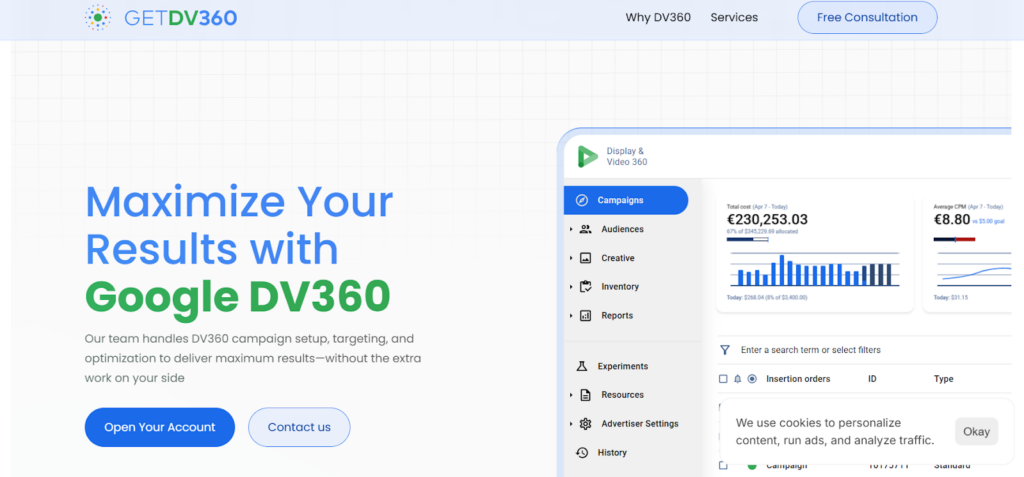
DV360 is Google’s enterprise-level DSP, integrated with the Google Marketing Platform. It provides seamless access to Google’s massive inventory, including YouTube, while offering advanced programmatic buying tools. Its key features & capabilities include:
- Direct integration with the Google Ads ecosystem
- Access to premium inventory like YouTube and Google Display Network
- Advanced audience segmentation using Google data
- Strong collaboration tools for agencies and teams
3. Amazon DSP
Amazon DSP specializes in leveraging Amazon’s rich shopper data, making it ideal for e-commerce brands. It allows advertisers to reach audiences both on Amazon-owned properties and across the wider web. Its key features & capabilities include:
- Access to Amazon’s first-party shopping and purchase data
- Retargeting capabilities for Amazon customers
- Inventory across Amazon sites, apps, and third-party publishers
- Strong focus on retail and product-based advertising
4. StackAdapt
StackAdapt is a self-serve DSP designed for flexibility and ease of use. It is popular among mid-sized businesses and agencies for its intuitive platform and strong support for native advertising. Its key features & capabilities include:
- Native, display, video, and connected TV ad formats
- AI-powered campaign optimization
- Strong emphasis on education and customer support
- Transparent reporting and analytics
5. Adform

Adform is a European-based DSP offering end-to-end programmatic solutions. It is known for its user-friendly interface and strong compliance with GDPR and privacy standards. Its key features & capabilities include:
- Integrated DSP, DMP, and ad server in one platform
- Strong focus on privacy and compliance
- Advanced creative management tools
- Global reach with localized support
6. Xandr (Microsoft)
Xandr, now part of Microsoft, is a powerful DSP offering access to premium inventory and advanced analytics. It is designed for large-scale advertisers seeking transparency and control. Its key features & capabilities include:
- Access to premium publisher deals and private marketplaces
- Advanced audience segmentation and targeting
- Strong analytics and reporting tools
- Integration with Microsoft’s broader advertising ecosystem
7. Blockchain-Ads
Blockchain-Ads is an emerging DSP that leverages blockchain technology to ensure transparency, prevent fraud, and build trust in programmatic advertising. It is particularly appealing to advertisers focused on accountability. Its key features & capabilities include:
- Blockchain-based verification of impressions and clicks
- Enhanced fraud prevention and transparency
- Decentralized data management for advertisers
- Innovative approach to trust and accountability in ad buying
Should Crypto and Web3 Brands Use Demand Side Platforms?
For crypto and Web3 brands, Demand-Side Platforms (DSPs) can be a powerful tool, but only when used strategically. These platforms make sense for projects and companies that need compliant advertising channels, scalable reach, and precise targeting in a fragmented digital ecosystem where traditional ad networks often restrict crypto-related campaigns.
- Compliance & Brand Safety: Many mainstream ad networks (such as Google and Meta) impose strict restrictions on crypto ads. DSPs allow brands to access vetted, compliant inventory across exchanges, ensuring ads appear in safe environments.
- Scalable Reach: Unlike other platforms, DSPs provide access to thousands of publishers, apps, and connected TV channels. This is crucial for Web3 brands aiming to reach global audiences across multiple touchpoints.
- Precise Targeting: DSPs integrate with data management platforms (DMPs) and third-party data providers, enabling granular targeting based on demographics, interests, behaviors, and even wallet-related signals. This helps crypto projects reach niche audiences such as DeFi traders, NFT collectors, and blockchain developers.
- Omnichannel Campaigns: Web3 adoption spans multiple formats, including display, video, audio, mobile, and connected TV. DSPs allow brands to unify campaigns across these channels, ensuring consistent messaging and better attribution.
DSPs typically require higher minimum spends than self-serve platforms like Google Ads. Budgets often start in the five-figure monthly range, making them better suited to growth-stage projects than to early experiments.
While upfront costs are higher, DSPs optimize spend through real-time bidding and performance tracking, often reducing wasted impressions and improving ROI over time. DSPs work best for brands with dedicated marketing teams or agencies that can manage campaign complexity, analyze data, and adjust strategies quickly.
DSPs Fit Growth-Focused Web3 Teams because;
- Performance Tracking Across Channels: Growth-focused teams benefit from DSP dashboards that consolidate analytics across multiple publishers and formats, making it easier to measure conversions and optimize campaigns.
- Scalability: As Web3 brands expand globally, DSPs provide the infrastructure to scale campaigns without being locked into one walled garden.
- Credibility & Transparency: Using DSPs signals professionalism and compliance, helping crypto brands build trust with mainstream audiences and regulators.
In short, DSPs are not the best fit for small, experimental crypto projects with limited budgets, but they are ideal for growth-focused Web3 teams ready to invest in compliant, scalable, and data-driven advertising strategies across multiple channels.
How to Choose the Right DSP for Your Business
Selecting the right Demand-Side Platform (DSP) is less about picking the “biggest name” and more about aligning the platform’s strengths with your brand’s goals, budget, and compliance requirements. Below is a decision framework that helps businesses, especially those in sensitive industries like crypto and Web3, evaluate DSPs systematically.
- Budget & Scale: DSPs often require higher minimum spends (commonly in the five-figure monthly range). For small budgets, consider self-serve DSPs like StackAdapt or niche platforms with lower entry thresholds. For enterprise budgets, platforms like The Trade Desk, DV360, or Xandr are better suited for large-scale campaigns.
- Audience Reach: If you need global reach, prioritize DSPs with access to multiple exchanges and omnichannel inventory (e.g., The Trade Desk). For regional campaigns, platforms like Adform (strong in Europe) may be more effective. Look for DSPs that allow compliant access to audiences beyond walled gardens like Google or Meta.
- Supported Channels: Connected TV (CTV) is essential for brands wanting premium video placements (The Trade Desk, DV360). Mobile & In-App are critical for Web3 projects targeting mobile-first users (Amazon DSP, StackAdapt). Digital Out-of-Home (DOOH) is useful for large-scale awareness campaigns (Xandr, Adform). Consider Audio & Podcasts if your audience consumes streaming audio (The Trade Desk, StackAdapt).
- Data Capabilities: Amazon DSP excels here with shopper and purchase data. The Trade Desk and DV360 offer robust integrations with DMPs/CDPs. Platforms like Blockchain-Ads emphasize transparency and fraud prevention through decentralized verification.
- Compliance & Brand Safety: Many mainstream ad networks restrict crypto ads. DSPs with strong compliance frameworks (Adform, Blockchain-Ads) help ensure campaigns run safely. Look for DSPs with advanced invalid traffic detection and brand safety controls.
- Funnel Goals: When evaluating DSPs, it is important to align them with your marketing funnel goals. For awareness campaigns, platforms that specialize in broad reach and premium inventory, such as Connected TV (CTV), Digital Out-of-Home (DOOH), and large publisher networks, are most effective, since they can deliver high visibility and brand recognition. For the consideration stage, DSPs that support native and video ads with strong contextual targeting help engage audiences more deeply and build trust by placing ads in relevant environments. Finally, for conversion-focused campaigns, DSPs with robust retargeting capabilities and access to rich first-party data, such as Amazon DSP or The Trade Desk, are ideal, as they enable brands to re-engage users who have already shown interest and drive measurable actions, such as sign-ups, purchases, or downloads. The choice of DSP should reflect where your audience sits in the funnel and the outcomes you want to achieve.
- Reporting & Analytics Sophistication: StackAdapt offers user-friendly dashboards for smaller teams. The Trade Desk and DV360 provide granular reporting, attribution modeling, and cross-channel insights. Blockchain-Ads stands out for its immutable reporting enabled by blockchain verification.
If you are a startup or a mid-sized brand, choose DSPs with lower entry costs, intuitive dashboards, and strong support (e.g., StackAdapt). As an enterprise or global brand, opt for DSPs with omnichannel reach, advanced analytics, and premium inventory (e.g., The Trade Desk, DV360, Xandr). For companies running Crypto/Web3 projects, prioritize compliance, fraud prevention, and transparency (e.g., Blockchain-Ads, Adform).
DSP vs SSP: How Are These Different?
Advertisers use a Demand-Side Platform (DSP) to buy ad inventory, while publishers use a Supply-Side Platform (SSP) to sell their ad inventory. DSPs focus on optimizing ad spend and targeting audiences, whereas SSPs focus on maximizing revenue and managing available impressions.
Advertisers, agencies, and brands use DSP. It automates the buying of ad impressions across multiple exchanges and its functionalities include;
- Using real-time bidding (RTB) to purchase ad space.
- Providing audience targeting (demographics, interests, behaviors).
- Offering campaign optimization and analytics to maximize ROI.
DSP ensures ads reach the right audience at the right time, at the best possible price.
Publishers and media owners use SSP. It automates the selling of ad impressions to maximize revenue, and its main functionalities include;
- Connecting publisher inventory to multiple ad exchanges and DSPs.
- Managing yield optimization (choosing the highest-paying bid).
- Providing controls for brand safety and ad placement.
SSP helps publishers sell their ad space efficiently and profitably.
| Aspect | DSP | SSP |
| User | Advertisers & agencies | Publishers & media owners |
| Objective | Buy ad inventory efficiently | Sell ad inventory profitably |
| Focus | Audience targeting, ROI optimization | Yield management, maximizing revenue |
| Data Use | Leverages audience data for targeting | Provides inventory data for bidding |
| Direction | Demand side (buying ads) | Supply side (selling ads) |
DSPs and SSPs are two sides of the programmatic advertising ecosystem. When a user visits a website, the SSP makes the publisher’s ad space available for auction. DSPs then evaluate the impression, bid in real time, and if successful, deliver the advertiser’s ad. This seamless interaction ensures publishers monetize their inventory while advertisers reach targeted audiences efficiently.
Compliance and Regulatory Aspects for Web3 Advertising With DSPs
For crypto and Web3 advertisers, using Demand-Side Platforms (DSPs) requires careful navigation of compliance and regulatory frameworks. Unlike traditional brands, Web3 projects operate in a highly scrutinized environment where financial claims, user protections, and jurisdictional restrictions are tightly enforced. Below are key considerations for scaling campaigns programmatically.
- Restrictions on Financial Claims: Advertisers must avoid exaggerated ROI claims, “guaranteed profits,” or speculative investment language. Financial regulators (e.g., SEC, FCA, ESMA) closely monitor crypto promotions and require disclaimers about risks and volatility. Use educational, utility-driven messaging (e.g., explaining product features) rather than speculative financial outcomes.
- KYC/AML Expectations: Platforms and regulators expect crypto advertisers to demonstrate compliance with identity verification standards. Ads promoting exchanges, wallets, or tokens must align with AML frameworks to prevent illicit activity. Many DSPs integrate compliance checks, requiring advertisers to certify adherence before campaigns go live.
- Ad Network Policies: Major networks (Google, Meta, TikTok) impose strict rules on crypto ads, often limiting campaigns to licensed exchanges or approved financial products. DSPs provide access to broader inventory, but advertisers must still comply with each publisher’s policies. Work with DSPs that offer pre-bid filters and brand safety controls to avoid non-compliant placements.
- Geo-Blocking for Regulated Regions: Some regions (e.g., China, India, certain U.S. states) restrict or prohibit crypto advertising. DSPs allow advertisers to block impressions in restricted geographies, ensuring campaigns don’t violate local laws. As regulations evolve, advertisers must regularly update their geo-blocking rules to remain compliant.
- Brand Safety & Risk Mitigation: DSPs offer invalid traffic detection to reduce exposure to bots and fake clicks. Advertisers can exclude categories (e.g., adult, extremist, or misleading sites) to protect brand reputation. Blockchain-based DSPs add an extra layer of trust by verifying impressions and clicks on-chain. Growth-focused Web3 teams should balance aggressive reach with compliance safeguards, ensuring campaigns build credibility rather than regulatory risk.
Web3 advertisers using DSPs must treat compliance as a growth enabler, not a barrier. By adhering to financial advertising rules, implementing KYC/AML standards, complying with ad network policies, and geo-blocking restricted regions, brands can scale safely while protecting their reputations.
Final Thoughts
Demand-Side Platforms (DSPs) have become essential for brands that want to scale efficiently and remain competitive in today’s privacy-first advertising landscape. By automating media buying, consolidating channel reporting, and leveraging advanced targeting, DSPs enable advertisers to reach the right audiences at the right time without relying solely on walled gardens like Google or Meta. Their ability to integrate with data management platforms, enforce brand safety, and adapt to evolving compliance requirements makes them particularly valuable for industries under regulatory scrutiny, such as crypto and Web3.
Ultimately, the right DSP choice depends on three critical factors:
- Budget: Larger enterprise budgets unlock premium inventory and advanced analytics, while smaller teams may benefit from more accessible, self-serve DSPs.
- Audience Reach: Global brands need omnichannel DSPs with cross-exchange access, while niche projects may prioritize platforms with specialized data integrations.
- Compliance Needs: Especially for Web3 and financial advertisers, DSPs that emphasize fraud prevention, geo-blocking, and regulatory alignment are non-negotiable.
By aligning these considerations with funnel goals and growth ambitions, brands can harness DSPs not just as ad-buying tools, but as strategic engines for sustainable, compliant, and data-driven growth in a world where privacy and transparency are paramount.
Frequently Asked Questions
Are DSPs exclusive to display advertising?
No, DSPs are not exclusive to display advertising. Modern DSPs support multiple channels, including video, mobile in-app, connected TV (CTV), audio, and even digital out-of-home (DOOH). Their strength lies in providing a unified platform for cross-channel programmatic campaigns, enabling brands to manage and optimize diverse ad formats from a single place.
Can DSPs track blockchain actions like wallet connections?
DSPs themselves don’t natively track blockchain actions like wallet connections. However, they can integrate with third-party data providers or Web3 analytics platforms that supply anonymized signals about wallet activity. This allows advertisers to target or retarget users based on blockchain behaviors, while still respecting privacy and compliance requirements.
How do costs work with DSPs? Are there hidden fees?
DSP costs typically work on a percentage-of-spend model, where advertisers pay a technology fee (often 10–20%) on top of media spend. Some DSPs also charge minimum monthly commitments or platform access fees. While reputable DSPs are transparent, hidden costs can arise from data usage, third-party integrations, or premium inventory, so brands should review contracts carefully.
Are DSPs more suited to awareness or conversion?
DSPs can be effective for both awareness and conversion, depending on how campaigns are structured. For awareness, they provide a broad reach through channels such as Connected TV, DOOH, and premium display. For conversion, DSPs leverage retargeting, audience segmentation, and data integrations to drive measurable actions. Their flexibility makes them suitable across the entire marketing funnel.